Efter Vinter Kommer Vår
A post-apocalyptic game in a gravel pit.
What it felt like to play
Six months before the game, you received an invitation and a constraint: build a tribe. Values, clothing, gear, culture.
On the day, you were picked up at the train station, checked in, changed into costume and searched for food. Then put back on the bus.
The bus dropped you in terrain with a map. No other instructions.
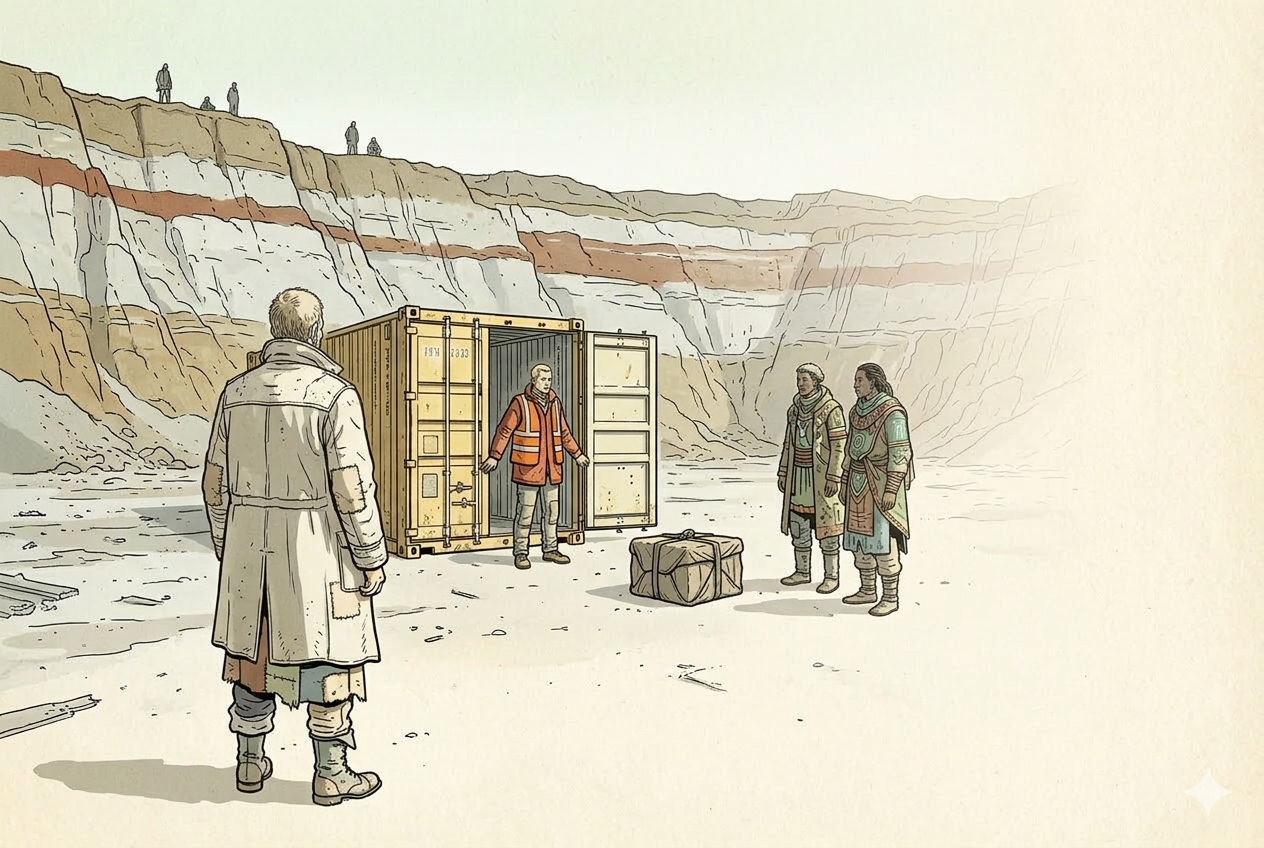
When you arrived you saw containers. A lamp post rising from the sand. Other people digging. That’s when it hit you, there were things buried out there. If you wanted them, you had to find them. You had to actually dig.
The containers were real. You could occupy one. The concrete blocks scattered across the site were real. Some were half-buried in the sand. When you discovered you could break them open and find food inside, something shifted.
The world didn’t care what you did. It was just there. So you had to do something.
You were playing a post-apocalyptic scavenger. So you scavenged. Not because the rules said so. Because you were hungry.
A lot of the time, nothing happened. Boredom was part of it, though nobody had told you that. When something did happen, a ritual, a trade, a confrontation, everyone came to watch. Any act of culture became magnetic.
Twenty-five years later you still talk about what the others invented. The creativity of strangers who had spent months becoming someone else, finally finding out who that was.
The design challenge
Strip a game to its bones. No game master. No prewritten story. Absolute scenography, everything in the world is exactly what it looks like. Players who don’t know each other, assigned to build tribes from scratch in the months before arrival. Minimal rules.
What’s left when you remove every abstraction? Can players fill that space with something real?
What it opened up
The resource scarcity we had designed as the engine of conflict turned out to be beside the point. Players weren’t driven by hunger. They were driven by each other.
The real content of the game was cultural exchange. Tribes with distinct identities, rituals, histories, invented from nothing, treated as ancient, meeting strangers in a quarry and finding out what they had in common.
We had built the stage expecting one kind of drama. The players wrote another.
The lesson was uncomfortable. The most empowered players don’t need conflict to generate story. They need a world worth inhabiting and other people worth meeting. Everything else is just scaffolding.