Starstruck
A party game about fame.
What it felt like to play
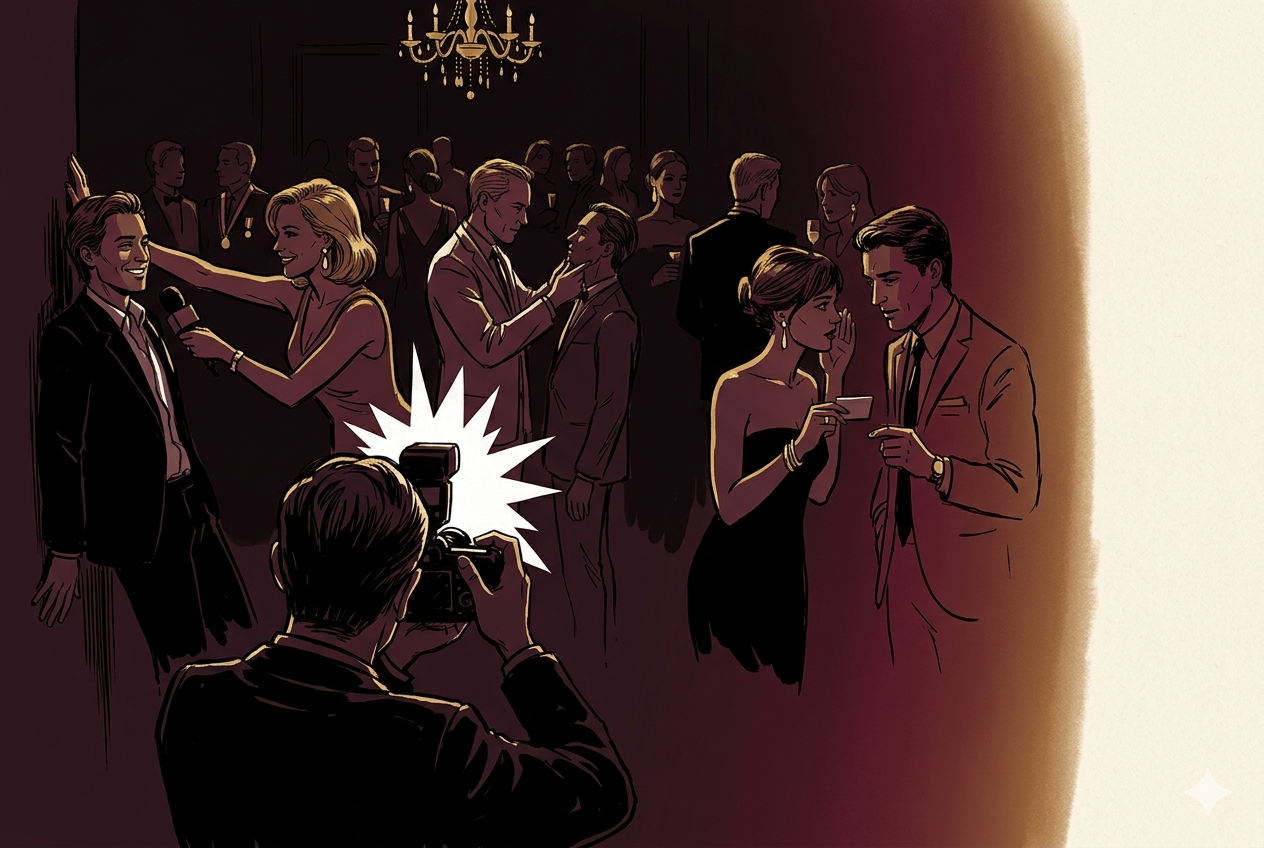
You are dressed for cameras that may or may not be watching.
The TV host is already circling. She pulls you aside, asks gently about your recently deceased dog. Off camera, sympathetic. Then she points the microphone at your face, counts down, five, four, and asks on live television how you feel about the rumours that your closest ally is voting you out.
Across the room the plastic surgeon is looking at you the way Picasso looked at a blank canvas. He has a card in his pocket that says “1600 millilitre implants” and he needs three volunteers before the night is over. He also needs a wife. For professional reasons.
You are collecting headlines the way other people collect debts. Someone in this room already knows your worst secret. You have no idea who.
Nobody came here to have fun. They came to be seen.
The design challenge
In 2008 fame felt like a contagion. Reality television had convinced an entire generation that celebrity was both achievable and meaningful. The characters in Starstruck were that generation, overdressed, over-ambitious, and completely hollow underneath.
The design challenge was to package a larp as a product. No designer in the room. Any number of players. Pick up the box and play.
What it opened up
Headlines as tradeable currency turned out to be the right mechanic. Fame made tangible, transferable and losable in a single conversation. Players understood it instantly and immediately started gaming it in ways we hadn’t planned.
The corruption theme needed no explanation. It was already in the characters, the camera, the marriage market and the secrets. Players arrived playing archetypes and left having enacted something uncomfortably close to the real thing.
Scaling larp to a product turned out to be harder than the game deserved. Too much depends on someone being in the room. Without a guide, the edges fray. Starstruck worked beautifully when we ran it. Getting it to run without us was a problem we never solved.
That problem is still interesting. We are still working on it.